
The One Skill Most Drivers Overlook (And Why It Could Save Your Life)
Driving is a complex activity that requires constant attention, quick decision-making, and the ability to anticipate potential hazards. While many drivers focus on mastering the technical aspects of operating a vehicle, such as steering and braking, one of the most critical skills for safe driving is often overlooked: scanning.
DEFENSIVE & SAFE DRIVING TECHNIQUES
AvantiDriving.com
5/15/20263 min read

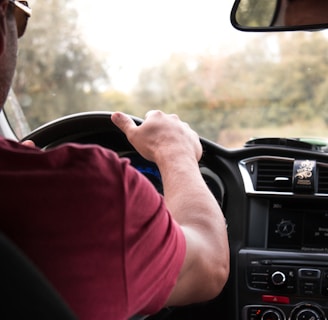
The One Skill Most Drivers Overlook (And Why It Could Save Your Life)
Steering, braking, and following traffic laws typically get all the attention when people talk about safe driving. But there’s a quieter skill—one that doesn’t come with a dedicated pedal or button—that often separates safe drivers from those who get caught off guard: scanning . It’s the constant, purposeful movement of your eyes that feeds your brain the information it needs to spot trouble before it spots you. Mastering this one habit can dramatically lower your risk of a crash.
What Scanning Actually Means
Scanning isn’t just looking around vaguely. It’s a deliberate, systematic way of gathering information from your entire driving environment:
Ahead: reading the road far beyond the car in front of you
Behind: checking rearview mirrors regularly
To the sides: monitoring adjacent lanes, sidewalks, and cross-streets
Blind spots: turning your head before any lateral move
Instead of staring fixedly at the rear bumper ahead, your eyes are in motion, updating your mental map every few seconds. That moving gaze is what gives you time to react.
Anticipate Problems Before They Become Emergencies
The biggest payoff of good scanning is early warning. When you see a pedestrian edging toward a crosswalk, a cyclist wobbling in your mirror, or a parked car’s wheels starting to turn, you don’t have to slam on the brakes—you already have a plan.
Notice brake lights flaring several cars up? You ease off the gas early.
Spot a merging vehicle on the highway? You adjust your position before they even signal.
Catch a ball rolling into the street? You’re already covering the brake because a child might follow.
Scanning moves you from reaction mode to anticipation mode, and that extra second or two is often the difference between a close call and a collision.
Stay Aware of the Full Picture
Drivers with strong situational awareness know not just what’s directly in front of them, but what’s happening all around. They can answer questions like:
“Is there a car sitting in my blind spot right now?”
“What’s the speed of the vehicle approaching from behind?”
“Are those construction barrels narrowing my lane in 200 feet?”
Without active scanning, huge chunks of critical information go unnoticed. Miss a fast-approaching motorcycle in the next lane, or misjudge the closing speed of a vehicle at an intersection, and an otherwise avoidable crash happens.
Adapt Smoothly to Changing Conditions
Roads don’t stay static. Weather shifts, traffic thickens, and the unexpected—debris, a sudden lane closure, an animal darting out—demands instant adjustment. Scanning lets you see the change as it emerges, not when you’re already inside it.
Spot the glare of ice on the road ahead before you hit it.
Notice the dark sky or first raindrops and adjust speed early.
Pick up on the erratic pattern of a driver two lanes over and give them space.
The sooner your eyes deliver the news, the calmer your response.
Shrink Your Blind Spots
Mirrors can’t show everything. Every vehicle has blind spots, and failing to check them causes countless lane-change and merging crashes. A quick head turn—something no mirror adjustment can replace—is part of a complete scan. Treat it as a non-negotiable step before any sideways movement, every time.
Scanning is Defensive Driving in Action
Defensive driving is built on the idea that you can’t control other drivers, but you can control how ready you are for their mistakes. Scanning is what makes readiness possible. If a driver runs a red light at the next intersection, your habit of checking cross traffic before entering gives you the chance to stop. If the car ahead panic-brakes, your 12-second down-road gaze has already created the following distance you need.
Confidence Comes From Clarity
New drivers especially often feel overwhelmed by how much is happening at once. Scanning gives structure to that chaos. Instead of trying to watch everything, you learn how to watch—moving your eyes purposefully, trusting your peripheral vision, and building a rhythm. As it becomes second nature, anxiety drops and control grows.
How to Build the Scanning Habit
Small, concrete changes make scanning automatic over time:
Mirror check cadence: Glance at rearview and side mirrors every 5–8 seconds.
Look 12–15 seconds ahead: Pick a fixed point and train your eyes to that distance.
Blind spot turns: Make a deliberate head check before every lane change or merge.
Intersection sweep: Look left, right, and left again even on a green light.
Keep your eyes moving: Don’t fixate. Scan instruments briefly and return to the road.
Eliminate distractions: A phone in a mount is still a distraction; stow it. Eating, tuning the radio, or deep conversations all steal scanning bandwidth.
Scanning doesn’t require talent—it requires intention. It’s a skill that pays dividends on every drive, transforming you from a passive passenger in your own vehicle into an active, prepared driver. Whether you’re on lesson one or year thirty, keeping your eyes moving and your awareness high is one of the simplest, most effective ways to protect yourself and everyone sharing the road.
The Avanti Driving Experience
Trusted driving education for over 43 years. Serving all 67 Florida Counties.
561-338-6400
© 1995-2026. All rights reserved. AvantiDriving.com Maintained by: NetSenseOnline.com